

The short answer
Surcharges are the fees FedEx and UPS add on top of your base rate, such as residential delivery, delivery area, additional handling, fuel and address correction. For many ecommerce brands they make up a large share of every parcel invoice. Expert invoice review catches surcharges that should not be there or do not match your contract, so you stop overpaying on shipping.
Why surcharges matter more than most brands realize
When brands look at shipping costs, they usually focus on the base rate. But the base rate is only part of what you pay. Every package can pick up several extra fees depending on where it goes, how big it is and how it was labeled.
Surcharges also tend to rise faster than base rates. Each year the carriers adjust them alongside their general rate increase, and new fees appear during peak season. A brand that never looks past the total on its invoice has no way of knowing which fees are driving its costs.
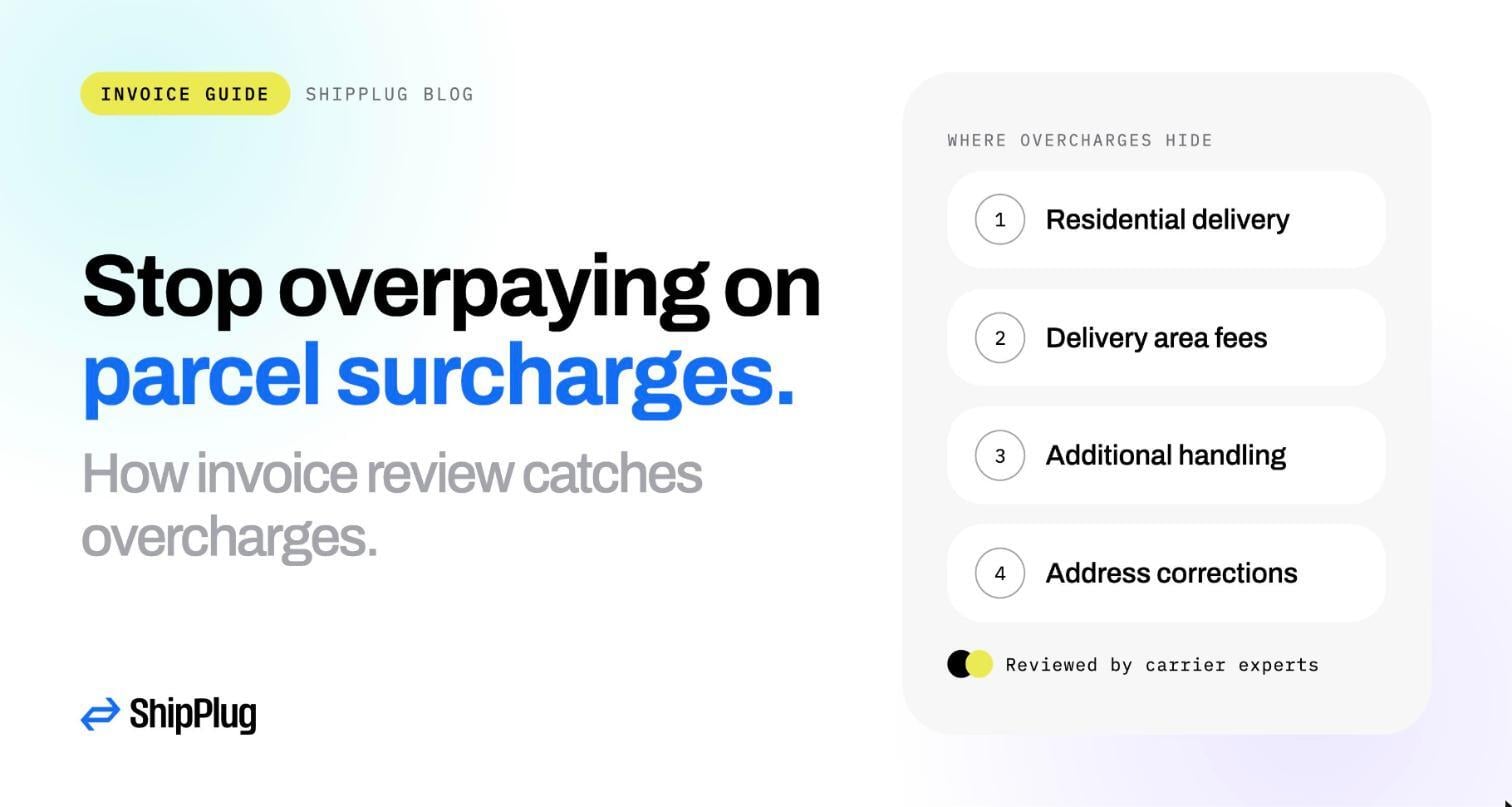
The surcharges that hit ecommerce brands most
Residential delivery
Charged when a package goes to a home instead of a business. For direct to consumer brands, this can apply to almost every shipment.
Delivery area surcharges
Added for deliveries to ZIP codes the carriers consider rural or harder to reach. These vary by location and can add up quickly if your customers are spread out.
Additional handling and large package
Applied to packages that are heavy, oversized, or not in a standard box. A small change in packaging can trigger these fees on every shipment.
Fuel surcharges
A percentage added to most charges, adjusted regularly based on fuel prices. Because it applies broadly, even a small change affects your whole bill.
Address corrections
Charged when the carrier has to fix an incomplete or incorrect address. These are often avoidable with better address validation at checkout.
Peak and demand surcharges
Extra fees during busy periods like the holidays. They are easy to miss because they come and go during the year.
Why invoices get overcharged
Carrier invoices are long, detailed and hard to read. Overcharges slip through when no one checks them line by line. Common reasons you end up paying more than you should:
- Surcharges that do not match your contract. A discount or cap you negotiated is not applied correctly.
- Residential fees on business addresses. Packages to commercial locations are billed as residential.
- Incorrect dimensional weight. A package is billed at a larger size than it actually was.
- Duplicate charges. The same package or fee appears more than once.
- Address correction fees you did not cause. The correction was not actually needed.
Each one may look small on its own. Across thousands of packages, they add up to real money.
How to review your parcel invoices
- Start with your contract. Know which discounts, surcharge terms and minimums you are supposed to receive.
- Rank your surcharges by total spend. Focus on the few fees that make up most of your extra charges.
- Compare charges against your agreement. Check that each surcharge and discount matches what you negotiated.
- Spot check package details. Look at billed weight, dimensions and address type on a sample of shipments.
- Track patterns over time. A fee that suddenly grows is a sign something changed in your packaging, your customer mix or the way you are being billed.
- Bring in an expert. Carrier billing is complex, and someone who reviews invoices every day knows where overcharges hide.
How to lower the surcharges you pay
- Negotiate surcharges in your contract. Residential, delivery area, additional handling and fuel can often be reduced or capped. See how to negotiate better FedEx and UPS rates.
- Rethink your packaging. Right sizing boxes can lower dimensional weight and avoid handling fees.
- Validate addresses at checkout. Cleaner addresses mean fewer correction fees.
- Review every invoice. Negotiated terms only save money if they show up on your bill.
How ShipPlug helps
ShipPlug helps brands stop overpaying on shipping with expert led invoice review. Our team reviews your FedEx and UPS invoices and makes sure the charges match what you should be paying.
- Expert led invoice review. Real people with more than 50 years of combined carrier experience review your invoices.
- Lower rates, including surcharges. We negotiate your FedEx and UPS agreement, and clients save an average of 30% on their rates.
- Automatic late delivery refunds. We recover late delivery refunds on packages that arrive even one minute late.
- No upfront cost. We only get paid when we save you money.
Frequently asked questions
What is a carrier surcharge?
A surcharge is a fee FedEx or UPS adds on top of the base shipping rate, based on things like delivery location, package size, fuel prices or address issues.
Which surcharges cost ecommerce brands the most?
For most direct to consumer brands, residential delivery, delivery area and fuel surcharges are the biggest, because they apply to a large share of shipments.
Can you negotiate FedEx and UPS surcharges?
Yes. Many surcharges can be reduced or capped in your carrier agreement, especially the ones that apply to most of your packages.
How do I know if my shipping invoices are overcharged?
Compare your invoices against your contract terms and check package details like billed weight, dimensions and address type. If you do not have time to review every invoice, an expert can do it for you.
How often should I review my parcel invoices?
Every invoice. Overcharges are easiest to address when they are caught quickly, and patterns are easier to spot when you review consistently.
Stop overpaying on shipping
ShipPlug reviews your FedEx and UPS invoices, negotiates better rates and recovers your late delivery refunds, with no upfront cost. Book a demo to see how much you could save.